
Torrey Criminal History Checks
A Torrey address alone does not reveal the records office. First determine whether WCSO, UHP, National Park Service, BLM, or another agency handled the event. Next separate the Torrey agency report from the booking record and court case. WCSO can help route recent custody. Utah Courts XChange covers public Torrey state district and justice cases, while PACER covers federal cases. BCI supplies a person's own fingerprint-supported Utah history and does not provide a public name portal.
Work through the Torrey search in this order:
- Read the Torrey citation, report heading, officer identification, and exact location to find the investigating agency.
- Request the Torrey report from WCSO, UHP, NPS, or the other agency that created it.
- Call WCSO or the arresting agency to learn which jail received the person because Torrey has no roster.
- Search Wayne County in XChange for a filed Torrey state case, or use PACER and the District of Utah for a federal prosecution.
- Use BCI's fingerprint process only when obtaining your own statewide Utah criminal-history copy, not as a public Torrey search.
Torrey's Three Record Systems
Torrey is a gateway community near Capitol Reef National Park. Torrey's geography places local, state, and federal records routes close together. WCSO handles ordinary Torrey law-enforcement work in town and on county roads. UHP handles Torrey-area state-highway enforcement. NPS rangers create federal agency records for park incidents near Torrey, and a resulting federal prosecution belongs to the U.S. District Court for the District of Utah.
| Torrey setting | Likely report holder | Possible court route |
|---|---|---|
| Town or county road | WCSO | Wayne Justice Court or Sixth District Court |
| State highway | Utah Highway Patrol | Wayne state courts when a state charge is filed |
| Inside Capitol Reef | National Park Service | Federal court or another route set by jurisdiction |
These Torrey routes are cues, not a claim about a particular event. Confirm the Torrey agency from an official document or direct contact before submitting a request.
Records at the Torrey Police Department
Torrey has no municipal police department. It publishes no police records counter, request form, arrest blotter, police app, warrant list, or city holding facility. WCSO is the main local channel for sheriff-created reports from Torrey. The office is in the Wayne County Courthouse at 18 South Main, P.O. Box 219, Loa, UT 84747, with phone 435-836-1308 and email wcso@wayne.utah.gov.
Do not send a Torrey park report request to a nonexistent Torrey police unit or assume WCSO owns it. NPS and BLM use federal records processes for Torrey-area records their officers create. UHP uses the Utah DPS route for its Torrey records. If the Torrey event later becomes a state case, the filed Torrey charge may still be held in Loa even though the original police report remains elsewhere.
The official Wayne County emergency-services page provides the current sheriff and dispatch contacts. Use it to verify the number before discussing a recent Torrey incident.
Identify Torrey's Arresting Agency
When a Torrey search is empty, check place and jurisdiction before changing spellings or widening dates. “Near Torrey” can describe a Torrey town address, a highway, county land, federal public land, or Capitol Reef. The Torrey officer's badge, citation header, incident number format, and location line are better routing clues than the nearest mailing place.
For a Torrey event inside the park, contact NPS through its official records or FOIA channel. For a state-road matter, contact Utah DPS. For a Torrey WCSO report, submit a county GRAMA request. Court records come later and answer a narrower question: what charge was filed and how did the judge resolve it? A no-result in Wayne XChange may mean the Torrey event remained federal, no state charge was filed, or staff have not entered the case yet.
If WCSO made the report, describe the Torrey place, date, approximate time, and desired Torrey record in writing. Include the Torrey incident number if known. Ask for an electronic copy and a fee estimate for Torrey video or a large file. Wayne County has not posted a specific sheriff fee schedule, so a Torrey requester should not assume the cost. Active Torrey investigations, juvenile information, victim details, and personal identifiers can be restricted or redacted under GRAMA.
Booking and Arrest Records in Torrey
A Torrey arrest may yield an agency report, jail intake record, prosecution file, court docket, and BCI repository entry. Those Torrey records are not interchangeable. The Torrey arresting agency records its observations and alleged legal basis. A jail records Torrey custody, fingerprints, property, initial charges, bond or release, and transfers. The prosecutor makes the Torrey filing decision. The court records Torrey hearings, orders, judgment, and disposition.
Torrey and Wayne County publish no live jail roster, booking log, city arrest gallery, or identified local detention vendor. Call WCSO at 435-836-1308 or non-emergency dispatch at 800-356-8757 for a local arrest, giving the full name, approximate time, and place. Ask which facility received the person. For a federal arrest, the arresting agency may be the better custody lead. A person in U.S. Marshals custody may not yet appear in the Bureau of Prisons locator.
Once the Torrey receiving jail is known, use only that facility's official rules for release confirmation, calls, visits, property, or money. Wayne sources do not identify a Torrey detention vendor or local visiting schedule. Borrowing instructions from another Utah county can send Torrey funds or mail to the wrong place. A WCSO-created Torrey booking sheet, if releasable, still requires a direct request because there is no Torrey booking portal.
When Torrey Records Look Empty
Do not treat one blank result as a final answer. XChange contains public Utah district and justice case data, not federal agency files or every arrest. UDC Offender Search focuses on current state imprisonment and probation or parole, excluding unsentenced county-jail detainees. PACER contains federal court cases, not NPS incident reports. BCI's Utah history is a subject-only fingerprint route, not an open Torrey lookup.
Return to the Torrey source. Ask which agency made the Torrey arrest, which jail accepted Torrey custody, whether a state or federal Torrey charge was filed, and whether the name or date has been entered. For a Torrey WCSO record, a written GRAMA request can reach releasable material that is not posted online. For a public Torrey state case, the clerk or courthouse terminal can supplement XChange.
The Torrey Municipal Court File
Torrey has no municipal court or town case portal. Wayne County Justice Court handles most class B and C misdemeanors, infractions, traffic matters, and county ordinance cases. Sixth District Court–Loa handles felonies and class A misdemeanors. Public case entries can appear in XChange after staff enter them, but juvenile, sealed, expunged, and designated private matters remain outside public view.
The official Sixth District Court–Loa page confirms the district court address and phone. The Wayne County office directory lists the justice court, sheriff, and county government contacts. Check both before making a records trip from Torrey.
| Court Name | Wayne County Justice Court and Sixth District Court–Loa; no Torrey municipal court exists. |
|---|---|
| Case Types Heard | Justice Court generally hears lower misdemeanors, infractions, traffic, and county ordinances. District Court hears felonies and class A misdemeanors. |
| Case Lookup Channel | Utah Courts XChange, free Loa courthouse terminal, or the relevant court clerk. |
| What the Docket Shows | Case number, parties, charges, hearings, public filed items, orders, judgment, sentence, and disposition where available. |
| Copies & Fees | One-time XChange searches are listed at $0.20 and district documents at $1; court copy costs depend on format. |
Torrey Federal Case Records
A federal incident near Torrey will not appear as a Wayne County state prosecution merely because Torrey is the nearest community. The U.S. District Court for the District of Utah is the relevant federal trial court. PACER is the official electronic federal-case channel and requires registration. The NPS report itself remains an agency record obtained through the federal records process.
The U.S. District Court for the District of Utah provides official court information for federal matters.
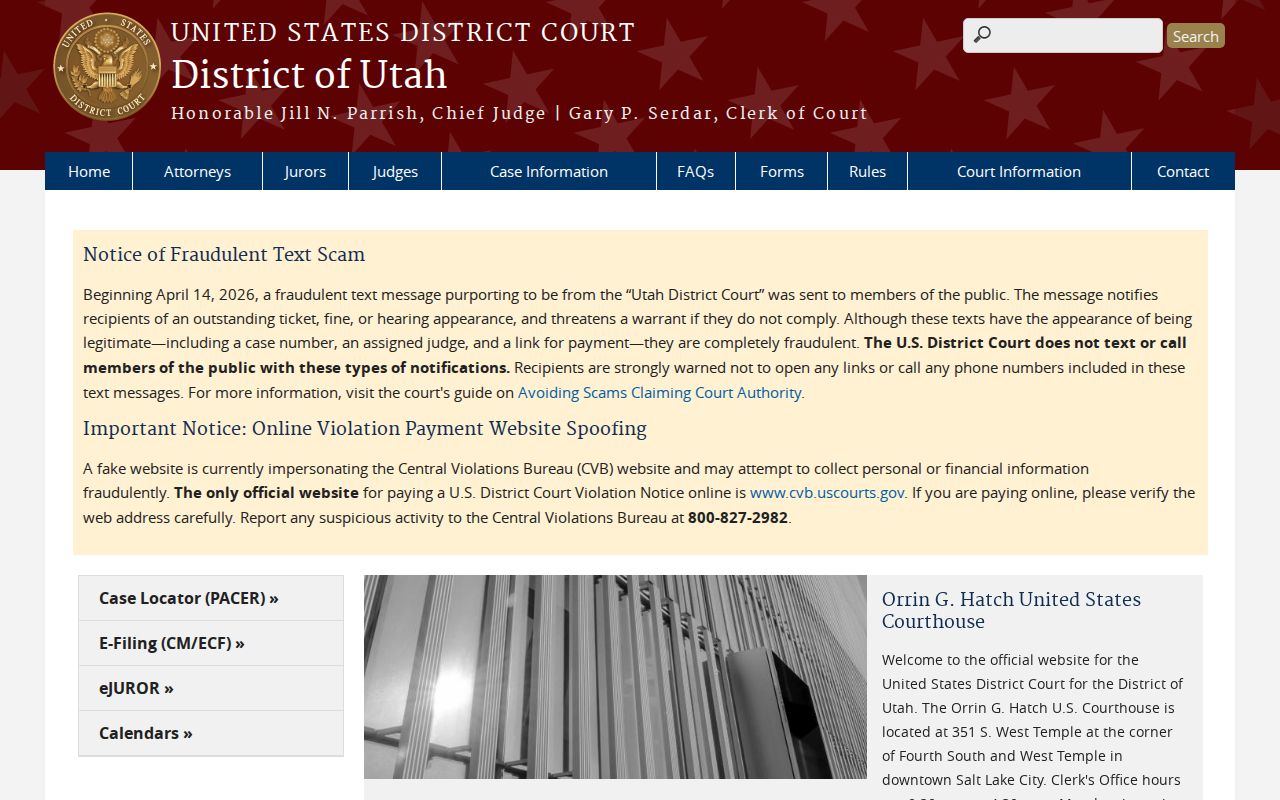
That court channel is distinct from XChange. Search both only when the facts leave open whether a charge was filed under state or federal jurisdiction.
How Torrey Records Reach the County
For a state matter, WCSO or UHP creates the report, a receiving jail creates the custody record, and the Wayne County Attorney makes the filing choice. The case then goes to Justice Court or Sixth District Court in Loa. Court staff enter public events into CORIS for XChange, and qualifying fingerprint-supported arrest and disposition data may reach BCI.
State record flow: WCSO or UHP › receiving jail › Wayne County courts › Utah Department of Public Safety Bureau of Criminal Identification
A federal Torrey-area matter follows a different line: NPS or another federal agency creates the report, federal custody may involve the U.S. Marshals Service, and a filed prosecution appears in federal court. Keep those paths separate. County staff cannot supply a federal ranger report merely because the event occurred inside Wayne County.
Torrey State Charges by Class
When a Torrey event becomes a Utah case, the filed class points to the correct Loa court. First-, second-, and third-degree felonies all go to Sixth District Court. Class A misdemeanors also go there. Justice Court generally handles class B and C misdemeanors and infractions. The filed charge can differ from the arresting officer's initial label, so read the docket through disposition.
The Utah punishment and classification chapter is the official source for the class framework behind those state case entries.
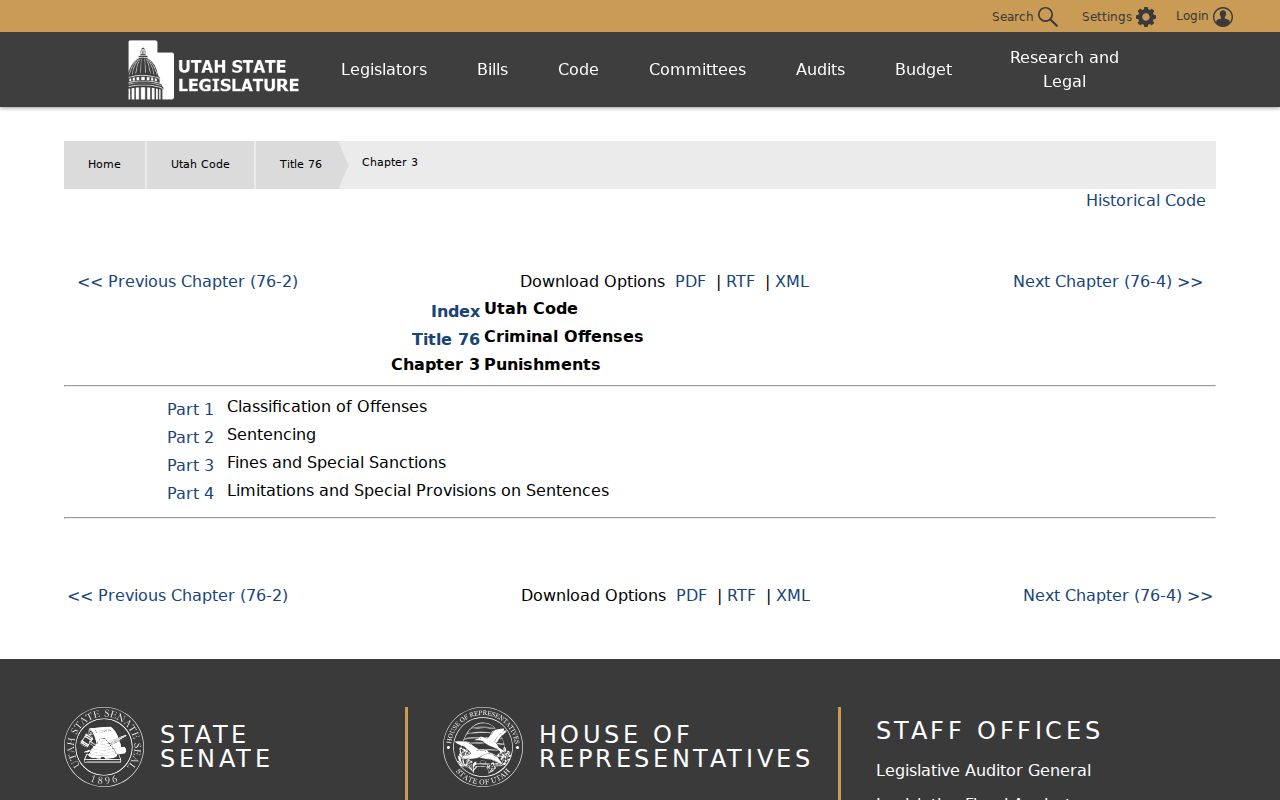
These statutory ranges are ceilings or general terms, not sentence forecasts. The offense statute, enhancements, court order, restitution, and case facts still control.
Torrey Registry Address Searches
The Utah Sex, Kidnap, and Child Abuse Offender Registry can be searched by surname and postal code, with location tools offered by the official interface. A Torrey address search is a public-safety channel, not a substitute for a police report or court case. An empty radius result can reflect the query, current public-registration duty, an update, or geography. It does not establish that no past court case exists.
Use the state registry through Utah DPS and NSOPW for cross-state coverage. Read offense, date, status, and location context. Utah Code §53-29-404 prohibits harassment, stalking, or threats based on registry information. Report suspected noncompliance to WCSO or the registry office rather than confronting anyone.
Torrey Record Access Rules
WCSO records use GRAMA. Utah court files use judicial public-access rules. NPS and other federal agency records use FOIA. Federal case files use PACER or the district clerk. BCI history remains restricted and subject-centered. Active investigations, juvenile information, protected victims, personal identifiers, sealed matters, and expunged matters may be withheld or omitted under the controlling system.
Key Statutes:
Utah Government Records Access and Management Act governs requests and record classifications for Wayne County and Utah agencies.
Utah Code §53-10-108 restricts BCI criminal-history dissemination and provides a subject challenge route.
Utah Code Title 77, Chapter 40a governs automatic and petition-based expungement of qualifying state records.
The county-wide overview offers more depth on the Wayne County criminal-history system. For Torrey, the most important rule remains local: identify the agency and jurisdiction before choosing a records portal.
Keep the search record type narrow. Ask WCSO for the sheriff report, the jail for custody, the Loa clerk for a state docket, and the federal agency or court for a park matter. That separation gives each custodian enough detail to locate its own file and reduces the risk of treating an allegation, booking charge, or incomplete docket entry as a final outcome.