
Wayne County Sex Offender Checks
The Utah Department of Public Safety maintains the Sex, Kidnap, and Child Abuse Offender Registry and its public Notification and Registration Website. Utah Code requires the public site to support indexing by surname and postal code. Community members can also narrow by Wayne County, city, address, or map controls when those choices appear in the current interface.
The registry is the source for current public registration data. XChange answers a different question by showing a public court case, and it may omit sealed or expunged cases. Wayne County Sheriff's Office handles local registration appointments and suspected noncompliance. No separate Wayne County registry map, sheriff app, or local alert product was found.
Wayne County Offender Registration
People required to register while residing in Wayne County should contact WCSO at 18 S Main, Loa, or call 435-836-1308 for an appointment, reporting location, verification schedule, and accepted payment method. Local appointment hours were not published in the official sources. BCI's current homepage notice lists a $125 annual Sex, Kidnap, and Child Abuse Offender fee, but registrants should confirm how the state charge is handled locally before arriving.
Wayne County Sheriff's Office
18 S Main
P.O. Box 219
Loa, UT 84747
Phone: 435-836-1308
Email: wcso@wayne.utah.gov
Community members should also call WCSO to report suspected noncompliance or an address that may be wrong. Immediate danger belongs with 911, not a registry contact form.
WCSO shares the courthouse with Wayne County's other record offices, but registry reporting remains a sheriff function. A court clerk can help with a public case file and cannot set a registration appointment or confirm a registrant's reporting schedule. Calling the sheriff first also lets a registrant confirm local hours and payment methods that were not available in published official material.
Utah Sex, Kidnap, and Child Abuse Offender Registry Searches
Reach the public registry through the Utah DPS website. For a Wayne County search, start with the least ambiguous fact available, such as a surname plus ZIP code, then widen only if the result is empty. Exact radius choices and alert-signup fields were not available in the official research capture, so users should rely on the live labels instead of assuming a fixed distance or subscription option.
- Open the Utah DPS registry and read its conditions and lawful-use warning.
- Enter a surname, ZIP code, address, city, or Wayne County filter.
- Review map and list results, then compare the available identifiers.
- Open the full public profile and read the offense, status, residence, and registration context.
| Field or control | Type | Required | Use |
|---|---|---|---|
| Name or surname | Text | No | Utah law requires surname indexing |
| Postal code or ZIP | Text | No | Utah law requires postal-code indexing |
| Address or location | Text or map | No | Supports geographic search when offered |
| City or county | Text or dropdown | No | Narrow to Wayne County or a municipality |
| Search radius | Dropdown or map | No | Use the live choices; exact values were not captured |
| Search / Reset | Buttons | Not applicable | Runs or clears the query |
| Map / list view | View controls | No | Displays qualifying public profiles |
The official Title 53, Chapter 29 index collects Utah's current registry provisions.
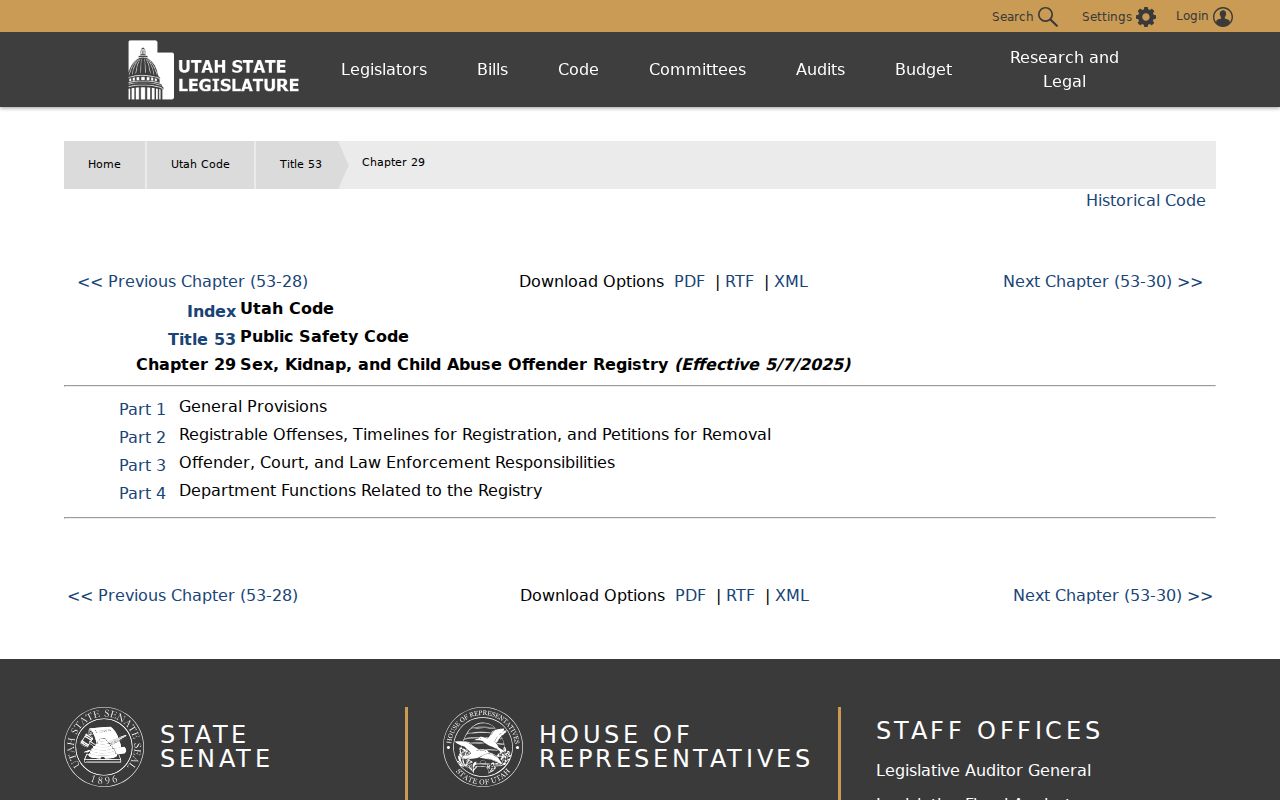
This source shows Wayne County readers why Utah's public registry language should be read through the current chapter, not an older citation.
Empty Wayne County Registry Results
An empty Wayne County radius or ZIP search is not a clean bill of history. The person may not be required to appear publicly, the entered geography may differ from the registered location, a record may be in an update cycle, or the query may be too narrow. Try a surname search, vary the geographic filter, and confirm spelling before drawing any conclusion.
The public website is not the full law-enforcement registry. Some collected identifiers and sensitive information remain non-public. A historic court case might be visible in XChange even when no current Wayne County registration duty exists, while a sealed or expunged case will not appear in public court search. These systems should not be treated as copies of each other.
Registry Profiles: What They Show
Utah Code §53-29-404 defines the public profile fields. A qualifying Wayne County listing may include names and aliases, a current photograph and physical description, offense information, court or jurisdiction, authorized residence details, vehicle data, public identifiers, registration status, registry category, and map context. The profile can also provide a way to report a possible error or suspected noncompliance.
| Name and aliases | Primary name and other names made public by statute |
|---|---|
| Photo and description | Current photograph and public physical traits |
| Residence information | Primary, secondary, or temporary residence details as authorized |
| Offense information | Registrable offense and court or jurisdiction context |
| Other identifiers | Vehicle information and public identifiers designated by law |
| Status and category | Compliance or registration status shown on a Wayne County profile |
| Map and reporting | Location context and instructions for suspected errors or noncompliance |
The public website statute is the primary source for profile fields and misuse limits.
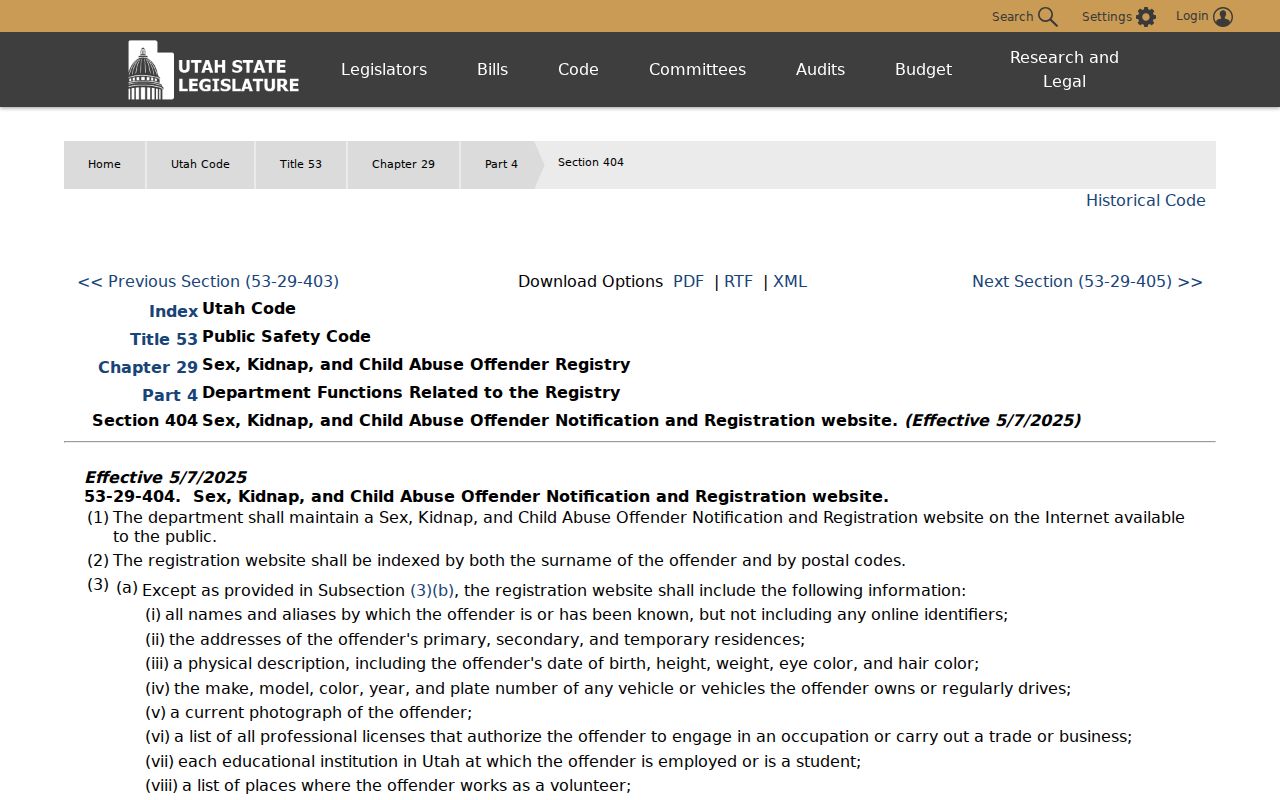
Using the statutory inventory avoids collecting or republishing any Wayne County resident's identifying profile.
Wayne County Registry and NSOPW
The National Sex Offender Public Website, or NSOPW, adds a cross-jurisdiction layer. It is useful when a Wayne County safety question reaches beyond Utah. NSOPW queries participating public registries, but it does not replace the source-state profile. Open the underlying Utah record for the current details, registration context, and official reporting route.
The official NSOPW search provides the nationwide public interface.
Pairing a national result with Utah's Wayne County profile helps avoid relying on a stale or context-free match.
A multi-state query can return similar names. Compare the source jurisdiction, public photograph, physical description, offense entry, and current registration details before deciding that a result concerns the same person. If an NSOPW link and Wayne County profile seem inconsistent, report the issue through the source registry rather than trying to reconcile private details through unofficial databases.
| Search layer | Best use | Limit |
|---|---|---|
| Utah DPS registry | Current public Wayne County profile and local reporting route | Shows only information authorized for public display |
| NSOPW | Cross-state and multi-jurisdiction search | Underlying source registry remains authoritative |
| Utah Courts XChange | Public case events and disposition | Not a current registration-status database |
Registration Levels and Duties in Utah
Utah uses offense-based ten-year and lifetime registration periods, not a simple public Tier I, II, and III label. The exact offense list and statutory conditions control. For Wayne County registrants, registration frequency and in-person verification depend on current classification and supervision terms, so WCSO should confirm an individual schedule rather than relying on a generic timetable.
| Utah category | Duration | Visibility or duty context |
|---|---|---|
| Offenses listed in §53-29-203(1)(a) | 10 years after sentence termination | The exact qualifying-offense list controls public duties |
| Lifetime offenses in §53-29-203(1)(b) | Life | Serious listed offenses and repeat circumstances; narrow exceptions apply |
| Certain under-21, non-force or non-coercion circumstances | Potentially 10 years after sentence termination | Requires the sentencing court's statutory determination |
| Eligible petition paths | Statute-specific | Eligibility, certificate, and court-order provisions govern |
The official duration statute separates ten-year and lifetime categories.
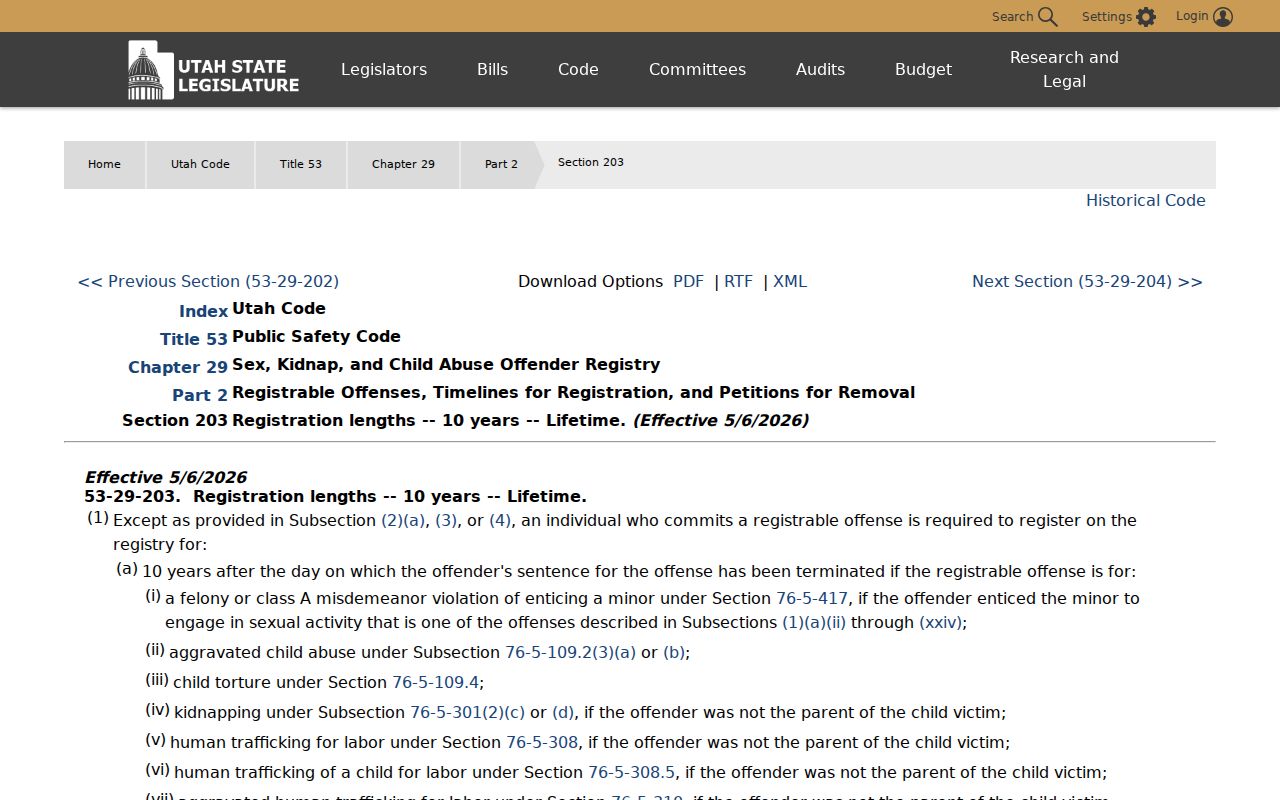
The statute, not an imported federal tier chart, supplies the correct terms for Wayne County registry duties.
Wayne County Registry and Court Records
A registry profile and a court case file serve different goals. The profile emphasizes current public registration information. The case file documents filed charges, hearings, orders, disposition, and sentence. When lawful context is needed, a reader may follow the court or jurisdiction listed in the profile and use the Wayne County court case lookup for a public state case.
Sealed and expunged cases are not displayed in public XChange. The Utah Courts expunged-case access page explains the narrow route for a subject to obtain that subject's own case history and order.
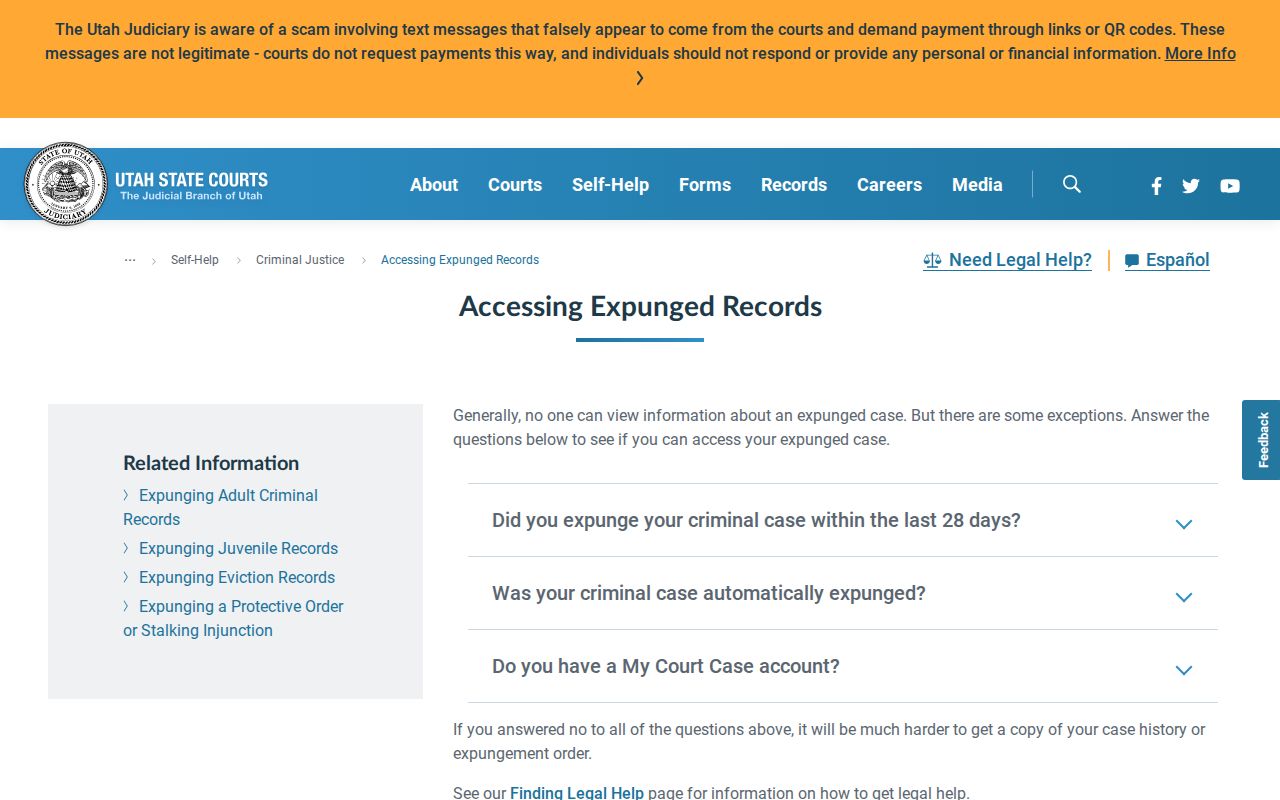
Public Wayne County registry status must still be assessed under Title 53 rather than inferred from an absent public court file.
Wayne County Registry Petition Paths
Time alone does not end every Utah registration duty. Sections 53-29-205 through 207 govern statute-specific petition eligibility, certificates, and court orders. Some categories are lifelong, and narrow exceptions or petitions depend on the exact offense and circumstances. A Wayne County registrant should use the current statute and court forms, then seek legal advice if eligibility is uncertain.
The Utah Courts form catalog is the official place to check current court forms rather than relying on a saved third-party copy.
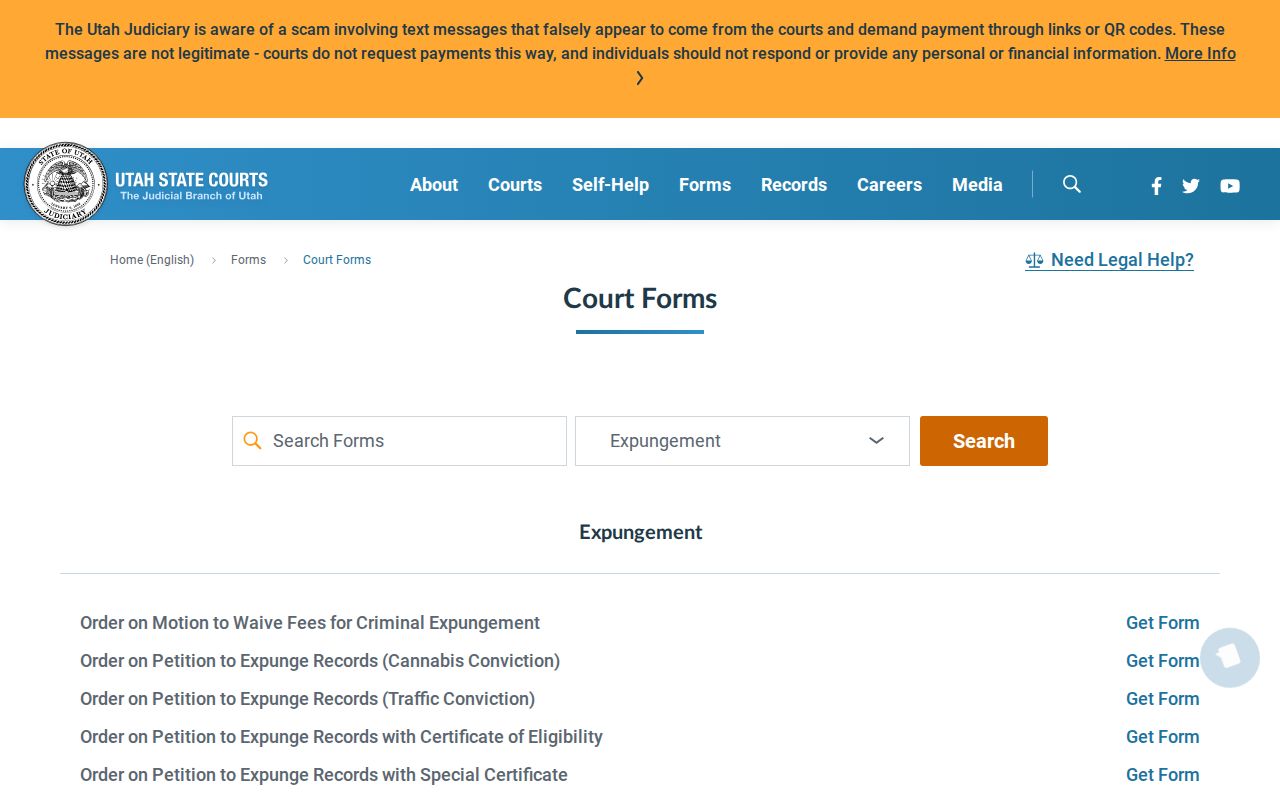
The correct filing path turns on the relief sought and the governing statute, not the mere passage of a set number of years.
Using Registry Information Lawfully
Wayne County registry information supports personal, family, and community safety. Read the offense, date, registration status, and statutory context together. Do not confront a listed person or family member. Send a suspected false address or noncompliance report to WCSO or the registry office, and use 911 only for immediate danger.
Utah misuse warning: Utah Code §53-29-404 prohibits harassment, stalking, or threats against an offender or family, and misuse may violate criminal law.
The Wayne County registry search does not predict future conduct. Map points can change as records are verified, and not every person with a past sex-offense case is required to appear on the current public website. Responsible use means checking the source profile, avoiding assumptions about nearby places, and reporting concerns through the government office that can verify them.
For routine Wayne County safety planning, save the official profile link or note the state record details rather than copying an entire profile into a public post. Recheck the government source when the timing matters. Public fields can change after a move, a status update, a correction, or a new court order, and an old screenshot may no longer reflect the registry maintained by Utah DPS.
If a profile appears wrong, record the public page and the specific field at issue, then send that concern to WCSO or the Utah registry. Government staff can compare the report with non-public registration records. Wayne County community members should not attempt their own address verification or publish claims that the responsible agency has not confirmed.